SEA-LION Inspires Community to Build AI Solutions That Solve Real-World Challenges in Southeast Asia
AI Singapore (AISG), together with its partners and collaborators, recently hosted the inaugural SEA-LION Summit: Powering Southeast Asia’s AI Future, a key platform demonstrating how SEA-LION is activating the community to build AI solutions that better understand Southeast Asia and solve its unique, complex challenges.
SEA-LION (Southeast Asian Languages in One Network) is a family of open Large Language Models (LLMs) developed by AISG to better represent Southeast Asia’s diverse contexts, languages, and cultures. Since its launch in November 2023, SEA-LION has been driving regional innovation in AI and LLMs by releasing over 1 trillion SEA language tokens, SEA-specific LLM benchmarks, and over four versions of AI models built to support real-world industry adoption across Southeast Asia.
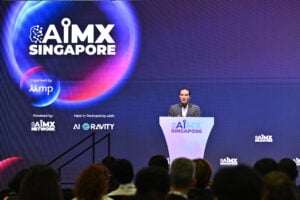
The event was graced by Guest of Honour, Mr. Tan Kiat How, Senior Minister of State for the Ministry of Digital Development and Information and the Ministry of Health.
SEA-LION: The Open Foundation Powering Regional AI Innovation
The core of AISG’s mission is to empower the regional community to build with AI that is culturally informed and linguistically accurate. SEA-LION is the comprehensive response to this need, going beyond just models to offer an end-to-end open foundation that includes:
● Data: The SEA-LION Data effort focuses on collecting and processing high-quality, multilingual datasets that include local dialects and common mixed-language communication (code-switching). To date, it has shared over 1 trillion SEA tokens across 13 regional languages and local dialects. This effort is essential because global data often fails to capture how Southeast Asians truly communicate, ensuring the models are culturally and linguistically accurate and relevant across the region. To continue accelerating the discovery, sharing and use of high-quality language datasets for Southeast Asia, SEA-LION has also developed a community-driven open data platform, Aquarium, to make it easier for anyone to contribute, browse and collaborate on language datasets across the region.
● Models: SEA-LION offers a family of open Large Language Models (LLMs) specifically tuned to maximise understanding across Southeast Asian languages. By providing these models openly, it enables local developers and researchers to adopt the model, customise, fine-tune, and innovate, accelerating the deployment of locally relevant AI applications across all key sectors. Beyond text, SEA-LON has also improved its capabilities to include multimodal, supporting both image and text input. To enable SEA-LION to be deployed across the unique and diverse landscape of Southeast Asia, the latest SEA-LION models have been designed to run on a laptop (32GB RAM).
● Benchmarks: Localised Benchmarks are developed to set rigorous standards for regional AI performance and safety. This is vital because global metrics often rely on Western cultural and linguistic assumptions. SEA-LION’s open benchmarks provide localised metrics to accurately measure model performance, fairness, and cultural safety, ensuring that deployed models are reliable, responsible, and culturally appropriate for every community.
Industry Leaders Building the Future of Regional AI with SEA-LION
The Summit highlighted how the open-source SEA-LION models are rapidly gaining traction across the ecosystem — serving as a foundational resource that empowers both large system integrators and specialised end-user organisations to solve complex, localised challenges. These deployments showcase how SEA-LION is activating the industry to build AI that reflects regional languages, cultures, and needs.
● Platform Adopters: System integrators like NCS and Good Bards are leveraging SEA-LION’s regional tuning and open resources to build scalable, multilingual AI platforms and services for their clients. This highlights how SEA-LION provides the superior linguistic fidelity needed for enterprise-grade solutions across Southeast Asia.
“Integrating SEA-LION as an LLM option within our Agentic Marketing OS gives Good Bards’ clients a distinct advantage in engaging the Southeast Asian region through a more localized lens. The importance of local context in customer engagement cannot be overstated, and with Good Bards, customers can easily leverage SEA-LION’s capabilities to engage their audience effectively. SEA-LION’s open-source nature and superior linguistic and cultural representation of our region mean that we can build more accurate and inclusive solutions for our enterprise clients focusing on Southeast Asia,” said Alan Ho, CEO & Co-founder of Good Bards.
● End-User Adopters: Organisations focused on specific social and educational outcomes, such as AWARE (Association of Women for Action and Research), the National Institute of Education (NIE) and UN Women, are applying SEA-LION models to enhance their direct services. These implementations address critical gaps in areas like culturally grounded multilingual support, information access, content localization, and personalised learning, empowering users to leverage AI to seek advice and assistance comfortably in their own native tongues.
“When the Talking Justice Proof of Concept moves to deployment, the multilingual, multi-modal, AI-supported grievance platform will integrate SEA-LION and link directly to official grievance systems. Workers will be enabled to file complaints safely, privately, and in their own language, directly from their phones or community centres. Integrating automated translation, conversational guidance, and built-in referrals to legal or psychosocial services that remove critical friction points in the current system. Beyond convenience, this approach centres worker safety, dignity, and empowerment, and could significantly improve the reach and responsiveness of labour protections in Thailand,” said Cate Sumner, Senior Consultant Digital Public Goods for Gender Justice, UN Women.
Developer Challenge: The Proof of Community Activation
The Pan-Southeast Asia AI Developer Challenge was a powerful showcase of how SEA-LION is activating and enabling regional AI talent. The Challenge, which was supported by AWS, Google Cloud Platform, Infocomm Media Development Authority (IMDA) and NVIDIA, brought together nearly 800 participants across 235 teams from across Southeast Asia and other regions, all building practical solutions for real-world needs in Education, Finance, Healthcare and the Public Sector.
To empower participants to build AI that truly reflects regional languages and contexts, the Challenge offered comprehensive community support — including virtual workshops, technical clinics, and mentorship from industry experts.
The SEA-LION Summit celebrated these efforts as a gathering of problem-solvers, highlighting how localised AI is addressing the region’s most pressing challenges.
The four winning teams demonstrated their solutions live, offering compelling proof of SEA-LION’s potential — from improving financial literacy for unbanked communities to delivering multi-dialect health advisories that bridge linguistic gaps across Southeast Asia.
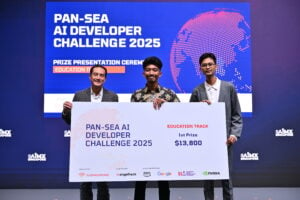
LENTERA is an offline AI microserver delivering AI and educational content to disconnected schools at under 5% of typical internet costs, bridging connectivity and AI gaps in underserved communities.
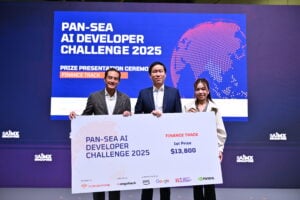
Winning Team for Finance (From Thailand: PetInsure X)
PetInsureX is an AI-powered pet insurance platform built for Southeast Asia. Powered by SEA-LION, it offers a multilingual assistant, automated OCR claims, pet identity & bleed detection, explainable fraud scoring, and faster payouts.
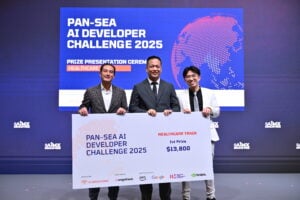
SIMIS is an AI Medical platform that uses computer vision and multilingual support to provide real-time, culturally aware guidance on using medical devices, reducing user errors in Southeast Asia.
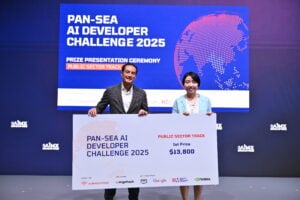
Winning Team for Public Sector (From Singapore: Archival AI: SEA-LION Civic Heritage Co-Annotation)
Archival AI leverages SEA-LION v4 and other multimodal AIs for speed and historian experts for accuracy to efficiently annotate Southeast Asian heritage photographs.
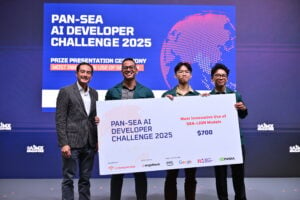
Zipo aims to bridge educational gaps in Southeast Asia with its personalised and accessible learning platform that transforms learning from a passive process into an active and personalised conversation.
Dr. Leslie Teo, Senior Director of AI Products at AI Singapore emphasised the path forward: “The innovation showcased in the Developer Challenge is a testament to what an active and engaged community can achieve when empowered by an open, regionally focused foundation. We hope this summit inspires developers, researchers, and enterprises to build and deploy the next generation of impactful AI solutions that addresses the many challenges and opportunities in Southeast Asia. Join this movement to harness the power of AI for all of us.”
Driving the Future of AI: Next Steps for the Community
The inaugural SEA-LION Summit had proven to be a true catalyst — turning open resources into real, regional impact. With the success of the Developer Challenge and growing industry adoption, now is the time for collective action.
AI Singapore invites developers, researchers, and enterprises across Southeast Asia to engage with the open SEA-LION ecosystem — by exploring and deploying the latest models, contributing to data and benchmarking efforts, and joining our expanding community.
Together, this shared commitment will drive the creation of responsible, high-impact AI that reflects the languages, cultures, and diversity of Southeast Asia, and solves real-world challenges and opportunities